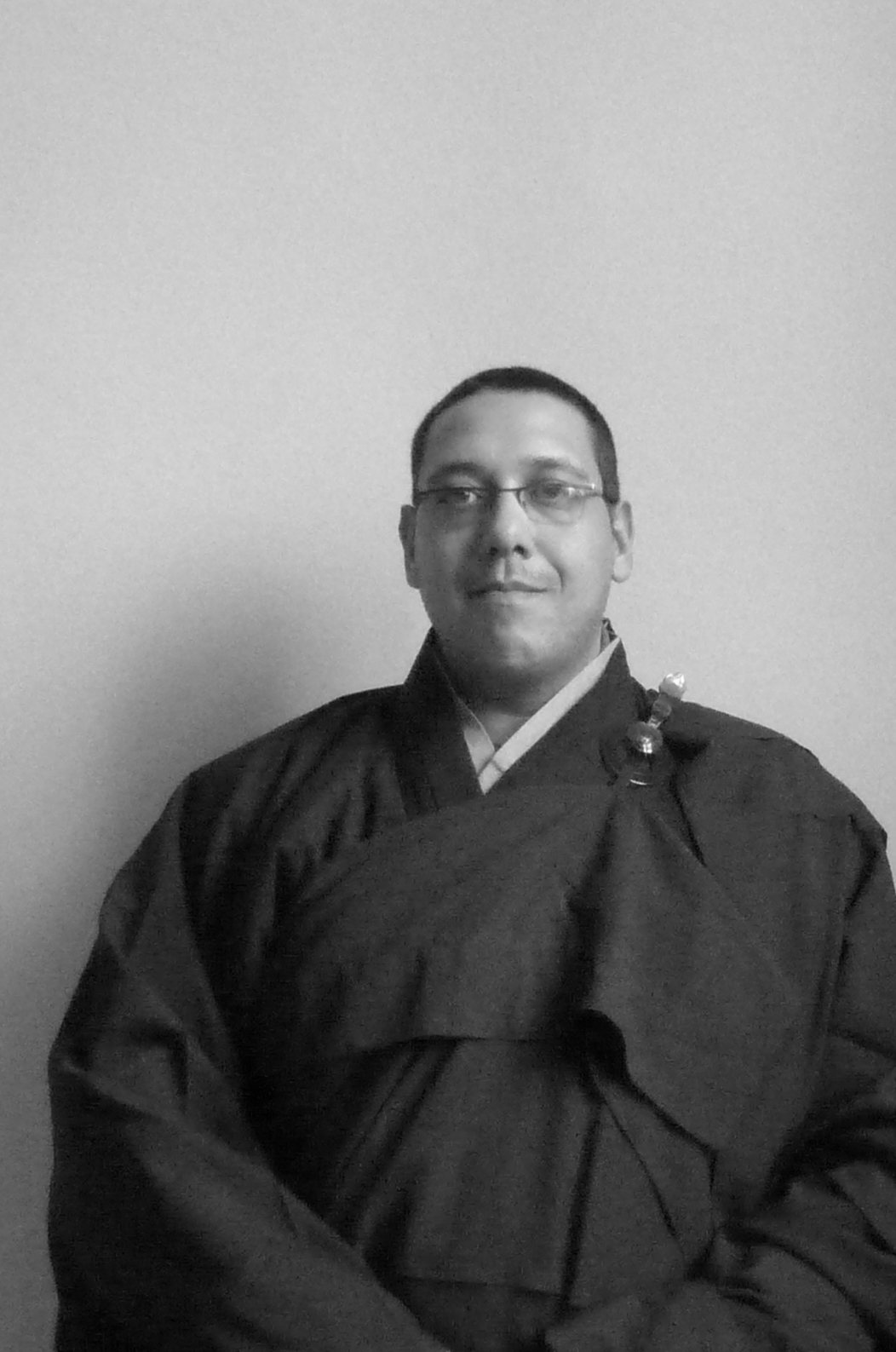
By: David Shen-Xi Astor
As Buddhism adjusts to the realities of Western culture it encounters some of the barriers that have traditionally separated the various world religious. We are witnessing some of those collapsing as a new model is emerging creating an inter-spiritual paradigm that begins to permit people from various traditions to explore the spiritual dimensions of other beliefs within their community. More people find themselves rooted in one tradition while seriously exploring another. This often is driven by the leadership within these traditions seeking an open dialog.
While the world religions in their respective beliefs and practices have been generally isolated from one another, at their core they share a deeper underlying dimension beyond philosophical, theological or mystical foundations. This is the common ground of intent that inter-spirituality explores: the dimension of understanding what makes humans explore the relationship between themselves and the universe beyond ordinary understanding. Inter-spirituality is based on the existential, innate interdependence of all beings, the essential interconnectedness of all reality. One of the core principles of Buddhism is the understanding of interconnectedness/interdependence of all things that can be projected to the reality that various religions and belief systems are really depend on one another for maintaining our cultural moral and ethical foundations that promote social justice and individual wellbeing.
As these barriers begin to give way, an acceleration over the past few decades is noticeable. However, there doesn’t seem to be a loss of identity among the traditions but rather the freedom to experiment in our search for a common spiritual path of understanding. This might mean that religions are no longer cultures set apart, but open systems conversing with the world and with one another either directly or through the agency of the interfaith movement. While this has been done within the various Christian detonations in the beginning, it has now expanded to include outreach with all the world religions. There are notable exceptions of course especially among some of the evangelical faiths. However, there is much interest in the West now to understand Buddhist thought and values especially as the term “Zen” and “meditation” has entered into our common speech.
Inter-spirituality encompasses many traditions and projects ranging from the spread of Eastern meditation practices among Christians, Jews, and Sufis, to inter-spiritual centers such as Osage Monastery, a monastic community dedicated to bringing Christianity, Hinduism and Buddhism together. There are Baptist and UCC churches that accept people of different traditions as well as Christian teachers who combine Zen mastery with the teachings of Christ. I would be amiss not to mention the extraordinary visionary Thomas Merton which has done much in his all to short life to champion the cause of understanding Buddhism for Christians, especially among Catholics.
Many efforts at inter-spiritual synthesis come in the form of meeting places where people of different traditions can come together to practice. My own experience as the Resident Teacher of the Epiphany Zen Center in Sebring, Florida, is that most come to learn and practice meditation and learn something about Buddhism, but they primarily attend a community Christian church or Jewish temple as their “faith of choice.” Curiosity brings them through our doors, but getting something meaningful, and even spiritual, keeps them coming back for a practice that is lacking, for now anyway, in their own religious community. While I opened Epiphany Zen Center as a Buddhist practice center, I learned quickly that 99% were more interested in mediation and some spiritual food for thought. So we switched focus and created a practice that honored Buddhist values but shared in a language that was more understandable to those attending. As a result they became comfortable in learning how Buddhism and their Christian/Jewish tradition had much in common. A win-win for our community and enriched my own Buddhist practice as well. I have even been invited several times to give the invocation at the County Commissioner Meeting as a Buddhist Cleric. A big step for a small town in Florida. What made this an easy transition for the Zen Center admittedly was my past experience as a past Christian religious monk, so I used that experience to share how Buddhism could be encountered using Christian/Jewish terms that did not alienate but promoted inclusivity and understanding.
Inter-spirituality is essentially an agent of a universal integral spirituality. We often walk the Inter-spiritual path in an intuitive attempt to reach a more complete truth even if we are not aware of our intent at the time. That final integration, a deep convergence, is an integral spirituality that I think resonates throughout the Four Noble Truths as it points to a deeper underlying truth that goes deep in order to gain moments of awakening. This brings together all the great systems of spiritual wisdom, practice, insight, reflection, experience, and science that provides a truly integral understanding of spirituality in its practical application, regardless of our chosen tradition of practice. Each spiritual tradition contributes insight to this human endeavor. All this spiritual wealth facilities our future work in transforming the human family. I am grateful that I live in a culture that has many spiritual traditions. But I admit that it would be easier as a Buddhist teacher if I did not have such an uphill climb. But because I don’t, my practice and sharing Buddhism with others is more rewarding. I can say without a doubt it has made my own spiritual journey stronger, one step at a time.
🙏🏼










 Order of Engaged Buddhists